Business Waste Removal in Plaistow
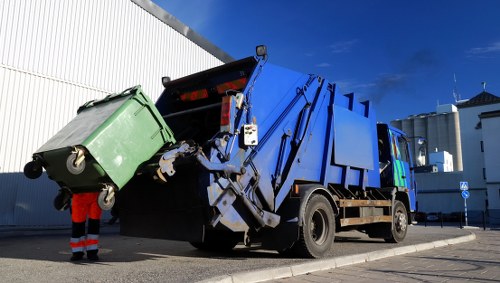
Business waste removal in Plaistow should be straightforward, orderly and suitable for day-to-day commercial activity. We handle the collection and disposal of mixed non-hazardous business waste, helping offices, shops, workspaces and other commercial premises keep on top of unwanted items and routine waste streams. The focus is on practical removal, sensible separation where needed, and a service that fits around normal trading rather than interrupting it.
Our work can include recurring waste clearance as well as one-off removals when storage areas, back offices or stockrooms begin to fill. We deal with commercial waste in a way that supports tidier premises, easier access and cleaner working conditions. If you are comparing options, use the pages on business waste removal and general waste removal to see the scope of the service in more detail.
For a clearer idea of costs, collection arrangements and the type of information that helps shape a quotation, you can also review pricing and quotes. If your requirement is more specific, please get in touch for a quotation and tell us what needs removing, how much there is and when access is available.
Commercial collections for regular and one-off waste
Business waste removal is not just about taking away loose rubbish bags. Commercial sites often produce mixed waste that needs a careful, organised approach, from packaging and packaging-heavy deliveries to broken office items, worn furniture and surplus materials from refurbishments. A good collection plan separates what can be loaded immediately from what needs a different disposal route, which helps keep the process efficient and reduces unnecessary handling.
We can support a range of premises with clear, direct collections, including offices, retail units, hospitality spaces, storage rooms and other workplaces that need space cleared without fuss. Where appropriate, the job can be planned around working hours, access restrictions or staged clearances. Clear communication before collection helps the process move smoothly, especially where lifting routes, loading points or shared access are involved. For customers who want to understand what can be handled alongside standard rubbish, the what can go in a skip page is useful background reading, even though the collection method here is different.
Handling mixed business waste responsibly
Many commercial clearances include a combination of paper, cardboard, packaging, broken fixtures, redundant office items and general non-hazardous waste. In some cases, items need separating before loading so that suitable material can be directed towards recycling or other appropriate processing routes. That is especially relevant when a premises is being reorganised, refitted or cleared after a change in layout. A well-planned collection avoids turning a straightforward job into a pile of mixed material that is harder to move.
Office waste and workspace clearances

Offices tend to generate waste in layers rather than all at once. Desks, chairs, filing cabinets, monitors, packaging, archive material and everyday rubbish can build up over time, especially where space is tight or a team has grown and changed. We help remove those items in a way that keeps workspaces usable, whether the aim is a reset of a single room or a broader office clear-out. A practical clearance can support better storage and simpler day-to-day movement through the premises.
Where the waste includes furniture or office contents that are no longer needed, it can often be more sensible to arrange one organised collection than to try to move things in stages. That is particularly true if access is limited, if items are bulky, or if there is a deadline for making space. For furniture-related items, the furniture disposal page gives a more specific view of that service, while furniture clearance covers larger mixed removals that include several items at once.
If you are preparing a quotation, it helps to note the item types, floor level, loading access and whether any items need dismantling before removal. Keep it simple: list the main items, share any access details and mention whether the clearance is a single visit or part of a larger workplace change. Then ask for a quotation and we can respond with a practical plan.
Furniture, fixtures and bulky item removal
Bulky business items often need a different approach from bagged waste. Tables, shelving, cabinets, reception furniture and worn seating can take up a surprising amount of room and may need to be shifted carefully through corridors or shared access routes. Our service can include the removal of bulky items from commercial premises, with attention to safe handling and the practical route out of the building.
In many workplaces, bulky waste is tied to a reorganisation or change of use rather than routine tidying. That might involve old meeting room furniture, redundant storage units or pieces that have simply reached the point where replacement makes more sense than repair. If the clearance also includes household-style contents from mixed-use premises, the office clearance and home clearance pages may help distinguish the service types available on this site.
Useful items to mention in an enquiry include the number of pieces, whether they are already in one room, and whether stairs, narrow corridors or limited parking will affect loading. If something is too large to move as one piece, say so; that allows the collection to be planned more sensibly. Call now if you are ready, or send the details through for a quotation.
Clearance for stockrooms, storage areas and back-of-house spaces
Stockrooms and back-of-house spaces often become the holding area for broken equipment, surplus packaging, obsolete stock and items waiting to be sorted. Over time, that can reduce usable space and make it harder to find what is still needed. Business waste removal can be particularly useful here because the work is less about a single object and more about restoring order to an area that has accumulated material over several months or longer.
We can remove mixed contents from these spaces when they are no longer required, with care taken over what is moved, what is separated and what is left in place. The approach works well for premises that need a back room cleared before a refit, stocktake or change in layout. If the project includes broken appliances or damaged catering equipment, the dedicated fridge and appliance removal page may be relevant for identifying the right disposal route for those items.
- Broken shelving and storage units
- Cardboard, packaging and surplus stock wrapping
- Out-of-use office or shop fittings
- General mixed commercial waste from one area
Special item handling and separate disposal needs
Not every business item should be handled in the same way as ordinary waste. Some materials or objects may need separate assessment, specialist loading or a different disposal route entirely. This can include hazardous waste, certain electrical items and materials that should not be mixed with standard commercial rubbish. Being selective at the start avoids problems later and helps keep the collection focused on what is suitable for the service.
Where a business has items that need special treatment, it is better to identify them before the collection rather than adding them on the day. The pages on hazardous waste disposal and confidential shredding are available for more specific requirements. If your premises includes papers, records or sensitive material that should be destroyed rather than moved whole, that distinction matters when planning the clearance.
There are also occasions when business waste is linked to a larger premises change, such as a move, a closure or a refurbishment. In those cases, mixed waste removal works best when it is separated from specialist items and grouped sensibly. That reduces delays, keeps the collection cleaner to manage and makes the quotation easier to assess. If you are unsure what falls into the main service, ask first and describe the contents clearly.
Planning a commercial clearance
A clear plan makes commercial waste removal easier to organise. For most enquiries, we only need a short description of the items, how much waste there is, where it is located and whether access involves stairs, shared entrances or restricted loading. Photographs can be helpful when you want to show the scale of the job, but they are not always essential if the items are straightforward and the description is specific enough. Keep the facts together so the quotation request stays concise.
If the clearance is part of a larger change to the premises, it helps to group items by area or by type. That makes it easier to distinguish what can go in the main collection and what may require a separate disposal route. The pages on garage clearance and loft clearance are mainly domestic in tone, but they can still give a sense of how organised clearances are structured when different parts of a property hold different kinds of waste.
When you are ready, share the basic details and request a quotation. If the collection needs to be arranged around opening hours, delivery slots or building access, mention that as well so the plan can be matched to the site rather than forced around it.
Why business waste removal needs a practical approach
Commercial waste is usually generated under pressure of time, floor space and routine operations. That makes consistency more valuable than improvisation. A practical approach takes account of volume, item type, access, loading and the final destination for the waste, rather than treating every collection as identical. For many businesses, that is the difference between a cluttered room and a work area that can be used properly again.
In practice, this means thinking about where items are stored, whether they can be lifted safely, and whether they should be moved in one visit or split into stages. Some clearances are straightforward and can be dealt with quickly; others need a little preparation to avoid blocking entrances or disturbing other parts of the premises. The useful pages on insurance and safety and health and safety policy explain the site’s approach to those topics, which matters whenever heavy or awkward waste is involved.
Good commercial clearance is also about judgement. An item that looks like simple waste may still need separate handling because of its contents, construction or condition. By being specific at the outset, you reduce the chance of last-minute changes and make it easier to build a quotation around the real work involved. That saves time on both sides and keeps the process focused.
About Plaistow
Plaistow is an area in the London Borough of Newham, in East London, with roots that go back long before the modern borough was created in 1965. Historically, it developed as a settlement on relatively flat land between other parts of the lower Lea Valley, and over time it became more closely tied into the wider urban fabric of East London through road, rail and residential growth. Its name is often associated with the older village and parish identity that preceded later expansion, while today the district sits within a densely built part of the capital with a mix of housing, shops and civic spaces. The area is connected to neighbouring districts such as Stratford, West Ham and Upton Park, and its everyday landscape reflects a long period of change from semi-rural edges to continuous city streets. Plaistow station, on the District and Hammersmith & City lines, gives it a direct rail link into wider London, while the A-road network and local streets shape movement across the district. The area also sits within reach of larger green and waterfront spaces in Newham and the wider Lea corridor, including parks and canals that form part of East London’s layered geography. Architectural variety is visible in the local street pattern, where Victorian and later housing sits alongside post-war development, smaller commercial strips and modern infill. Religious buildings, schools and local shops contribute to a lived-in neighbourhood character, and the nearby stadium and regeneration areas to the north-west and west have also shaped the public identity of the surrounding district. Like many parts of Newham, Plaistow reflects the meeting point of history, redevelopment and everyday residential life.
Arranging a quotation for your premises

Once you know what needs to go, a quotation becomes easier to shape. The most useful details are the type of waste, the estimated amount, where it is located and whether any pieces are particularly heavy, awkward or separated across different rooms. If the collection includes a mixture of general business waste and a few larger items, say that clearly so the quote reflects the whole job rather than only part of it.
We can discuss the collection in a straightforward way and help you decide whether the removal can be handled as one visit or whether it makes more sense to divide the work into sections. That is often useful for offices, shops and shared premises where access or operating hours matter. If you need to compare business waste removal with other services on the site, the about us and contact us pages are available, but the main step is simply to outline the waste and ask for a quotation.
Send the details when you are ready, and we can take it from there. For a practical clearance in Plaistow, start with a clear description, include any access notes and request a quotation today.